What to Expect During a Golf Movement Assessment
If you're over 30 and you've noticed your back, hip, or shoulder complaining more on the back nine than it used to, golf probably isn't the problem—it's the messenger. A round of golf asks your body to rotate hard, load one side more than the other, and repeat that pattern dozens of times. If a joint or muscle group has been quietly restricted for years, golf is simply the activity demanding enough to bring it to the surface.
That's the idea behind a golf movement assessment: instead of guessing at what's causing discomfort, it systematically identifies where your body's movement is limited, so the plan that follows actually addresses the source rather than chasing the symptom.
What Is a Golf Movement Assessment?
A golf movement assessment is a structured series of mobility, stability, and balance tests built specifically around the demands of the golf swing. The framework was developed by the Titleist Performance Institute (TPI), which studies how the body's physical limitations show up in swing mechanics. Rather than watching your swing and guessing at the cause of a fault, the screen works the other direction—it evaluates your hips, spine, shoulders, and balance first, then connects what it finds to the patterns showing up in your game and your pain.
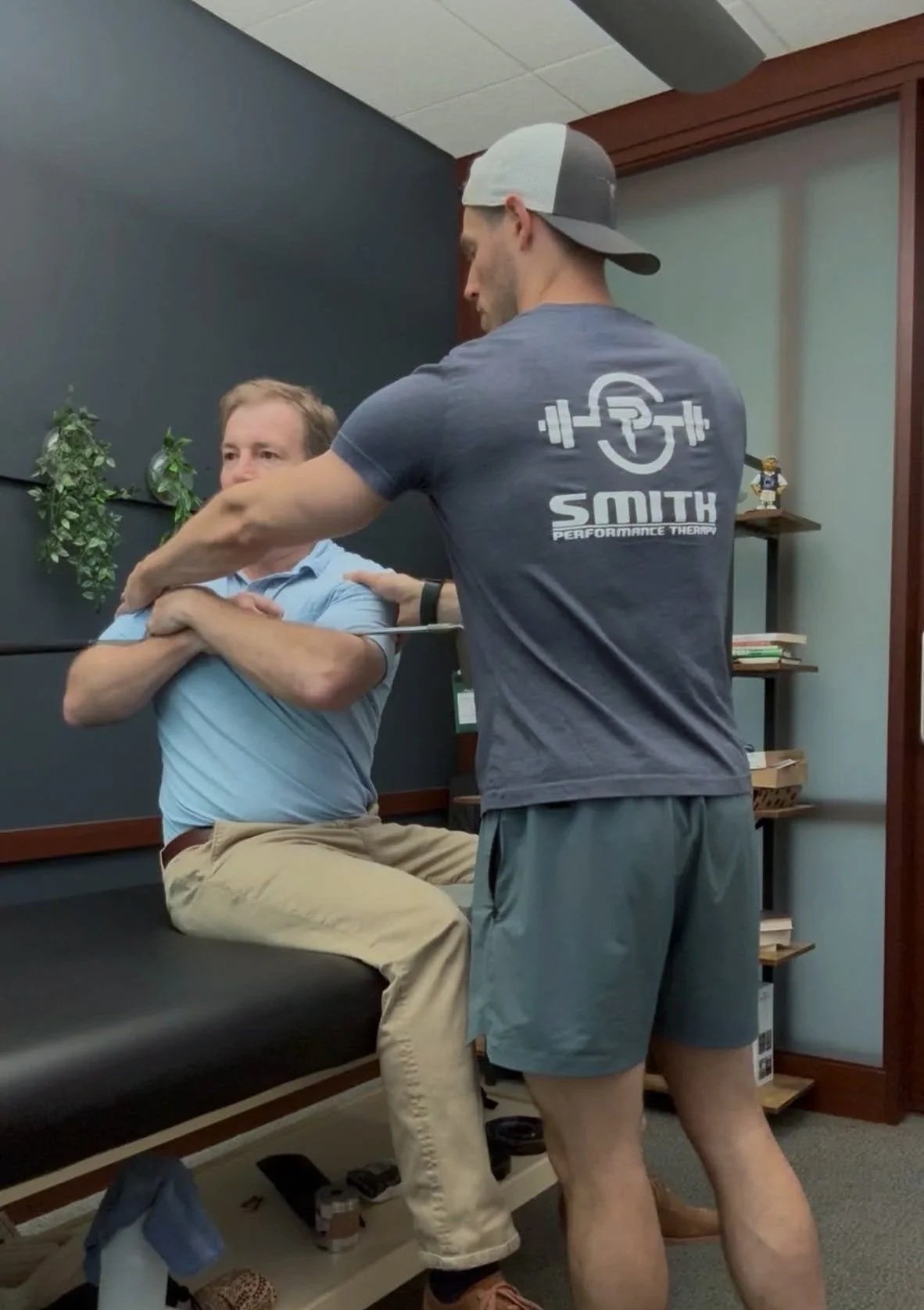
At Smith Performance Therapy, this assessment is performed by Dr. Kevin Smith, PT, DPT, OCS, COMT, TPI Certified, who combines his orthopedic and manual therapy training with golf-specific screening to look at the whole picture—not just the joint that hurts.
Why the Assessment Looks Beyond the Sore Spot
The golf swing relies on a coordinated chain of movement running from the ankles through the hips, spine, and shoulders. When one link in that chain is restricted, the body typically finds the motion somewhere else—often a joint that wasn't built to handle the extra load. Research on golfers with low back pain has repeatedly pointed to this pattern: golfers with chronic low back pain tend to show reduced internal rotation of the lead hip compared with golfers who don't have back pain, and that hip restriction is thought to force the lumbar spine to rotate more than it's designed to during the swing.
This is precisely why a thorough assessment doesn't stop at the painful area. A screen might include over a dozen individual tests covering the hips, spine, shoulders, and core control—because pain in one region is frequently traceable to a restriction somewhere else entirely.
What Happens During Your Assessment
A conversation first. Before any testing, we talk through your history, your goals on the course, and what activities—golf or otherwise—tend to provoke your symptoms.
A series of movement tests. You'll move through a battery of standardized mobility and stability checks covering your hips, thoracic spine, shoulders, and core control. These are the same categories of tests used in golf-specific functional movement screening designed to identify issues golfers may encounter during the swing, adapted here for an active-adult population managing everyday aches rather than searching for extra yardage.
Pattern-matching, not guesswork. Your results are compared against what's known about how specific restrictions tend to show up—both in daily life and in a golf swing—so we can prioritize what to address first.
A plan, not just a report. You'll leave with a clear picture of which movement gaps are most relevant to your pain and your goals, and a starting point for closing them.
Common Findings in Active Adults 30 and Older
The limitations we see most often in this population aren't exotic—they're the same restrictions that build up gradually with age, prior injuries, and years of sitting or repetitive movement:
Limited hip rotation, particularly on the lead-leg side, which has been associated with a higher likelihood of low back pain in golfers of all skill levels.
Reduced thoracic (mid-back) rotation, which forces the lumbar spine or shoulders to compensate for motion they weren't built to provide repeatedly.
Asymmetrical balance and single-leg control, often unnoticed until an activity like golf highlights the difference from one side to the other.
None of these limitations were caused by golf. Golf simply asks enough of the body, often enough, to make them impossible to ignore.
From Assessment to a Pain-Free, More Capable You
The goal of the assessment isn't to hand you a list of things that are “wrong.” It's to identify the specific gaps keeping you from moving the way your body is designed to — and then build a plan that closes them. For most clients, that means restoring golf-specific rotation, power, and control needed to play the way you want, for as long as you want—which helps them maintain a pain-free baseline in everyday life, too.
Frequently Asked Questions
Do I need to be a low-handicap golfer to benefit from this assessment?
No. The assessment is built around golf-specific demands, but the movement patterns it evaluates—hip rotation, trunk control, balance—matter just as much for everyday activities like reaching, twisting, and bending.
How long does a golf movement assessment take?
Most assessments take about 60 minutes, including time to discuss your history, goals, and results.
Will I need X-rays or imaging beforehand?
Not typically. The assessment is a hands-on, movement-based evaluation. If imaging is warranted based on your history, that will be discussed separately.
Is this only useful if I'm currently in pain?
Not at all. Many clients use the assessment proactively to identify limitations before they become painful, especially heading into golf season.
Where is Smith Performance Therapy located?
Smith Performance Therapy is located in Mt. Pleasant, SC and serves clients throughout the larger Charleston area.
Ready to find out what's really behind your discomfort on the course? Schedule your golf movement assessment with Dr. Kevin Smith, PT, DPT, OCS, COMT, TPI Certified, today.
