How a TPI Assessment Can Improve Golf Performance
If you've ever left a golf lesson with a clear understanding of what you need to change but found it difficult to actually make those changes, the limiting factor may not be your swing—it may be your body's ability to perform the movement.
That's the premise behind the Titleist Performance Institute (TPI) model. Rather than replacing swing instruction, a TPI assessment complements the work of your golf coach by identifying physical limitations that may be preventing you from making the changes you're being taught. When your body can move the way your instructor intends, swing changes become easier to learn, more consistent, and more likely to stick.
That's why more golfers in the Charleston and Mt. Pleasant, SC area are incorporating a TPI assessment alongside their lessons. At Smith Performance Therapy, Dr. Kevin Smith, PT, DPT, OCS, COMT, and TPI-Certified, works with golfers and their instructors to improve mobility, stability, strength, and movement patterns that support a more efficient golf swing. The goal isn't to change your swing—it's to help your body perform it more effectively, allowing you to move better, swing faster, and stay out of pain.
What Is a TPI Assessment?
A TPI assessment is a golf-specific physical screening developed by the Titleist Performance Institute to answer one essential question: Does your body have the mobility, stability, and movement capacity to perform the swing your instructor is asking you to make?
By identifying physical restrictions and movement inefficiencies, the assessment provides valuable information that can guide both your performance training and your golf instruction, helping everyone involved work toward the same goal: a more efficient, repeatable, and pain-free golf swing.
Unlike a generic fitness evaluation, a TPI screen examines the specific joints and movement patterns that drive an efficient golf swing: thoracic spine rotation, hip mobility, shoulder range of motion, single-leg balance, core stability, and more. The guiding philosophy of TPI is simple: there is no single "correct" golf swing, but there is an efficient way for your body to swing a golf club, given its unique mobility, strength, and stability profile.
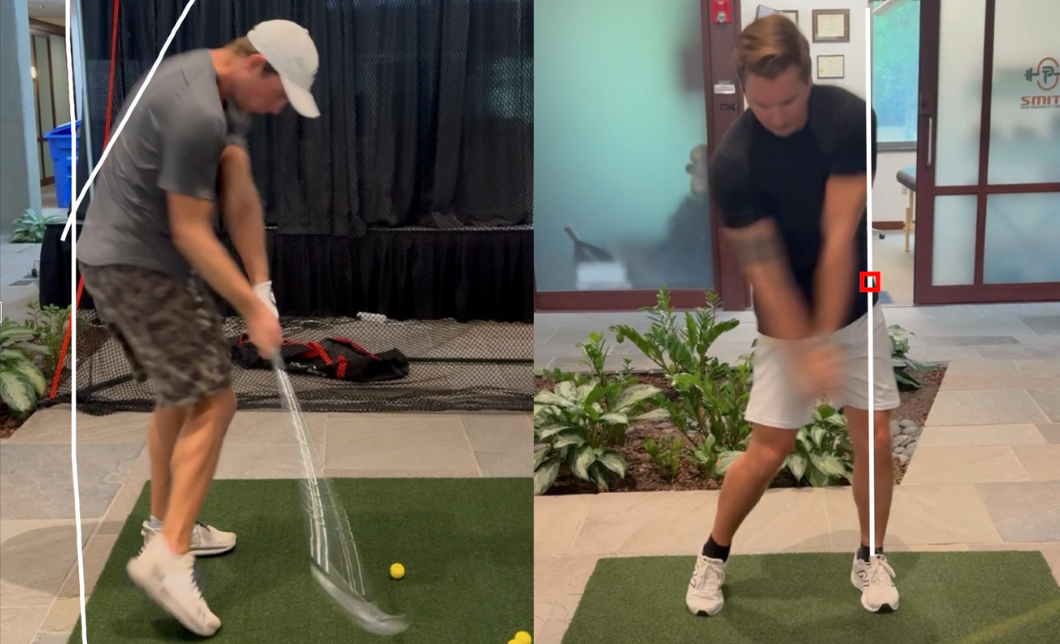
When a physical limitation is present, like a tight hip, a restricted thoracic spine, or weak glutes, other parts of the body compensate. Those compensations show up as classic swing faults: early extension, over-the-top moves, loss of posture, a reverse spine angle. You can work on the mechanics forever, but if the underlying physical restriction never gets addressed, the fault tends to come right back.
The Research Behind TPI
This isn't just theory—it's backed by peer-reviewed research linking physical screening results directly to swing outcomes and injury risk.
A study published in the Journal of Strength and Conditioning Research examined TPI Level 1 movement screen results against 14 common golf swing faults in 36 golfers. The researchers found it was important for golf fitness professionals to specifically address a golfer's core strength, balance, and hamstring flexibility to help avoid common swing faults that affect ball-striking ability and overall performance. In other words, measurable physical limitations were directly connected to the swing faults golfers were fighting on the course.
Hip mobility, in particular, has a strong research link to low back pain—the single most common injury in golf. One case-control study of amateur golfers found that those with low back pain had significantly reduced lead hip rotation compared to golfers without pain. Similar findings have been reported in professional golfers, where deficits in lead-side hip internal rotation were associated with higher rates of low back pain. Since low back pain accounts for roughly a quarter to over a third of all reported golf injuries, identifying and correcting a hip mobility restriction before it becomes painful is one of the most valuable things a TPI assessment can do.
Strength and power also matter more than most golfers realize. A systematic review of resistance training research concluded that combining general strength training with golf-specific rotational training increased clubhead speed by an average of 4.1% and hitting distance by 5.2%—meaningfully more than generic strength training alone. A separate randomized controlled trial of collegiate golfers found that an eight-week strength and power program improved squat, power clean, and jump performance in a way that was directly associated with increased clubhead speed. The takeaway: distance isn't just a swing-mechanics problem—it's a physical output problem, and it's trainable.
Why a TPI Assessment Matters More Than a Generic Workout
Most gym programs aren't built with a golf swing in mind. A golfer doesn't need generic cardio or isolated bicep curls, they need rotational power, single-leg stability, thoracic mobility, and a body that can transfer force efficiently from the ground up through the club. Without a proper screen, it's guesswork.
A TPI assessment removes the guesswork. It identifies exactly which movement patterns are limited, then connects those findings to specific golf performance outcomes—swing efficiency, club speed, consistency, and injury risk. From there, a truly individualized training plan can be built, rather than a one-size-fits-all golf workout pulled from the internet.
What Sets Smith Performance Therapy Apart
Plenty of trainers in the Charleston and Mt. Pleasant area can put a golfer through a workout. Far fewer can combine that with the clinical background to actually diagnose why a limitation exists in the first place.
Dr. Kevin Smith brings both. As a Doctor of Physical Therapy, Board-Certified Orthopedic Clinical Specialist, and Titleist Performance Institute-Certified provider, he doesn't just run golfers through a screen and hand them a generic exercise sheet. He identifies the root cause of a mobility restriction, strength deficit, or old injury—the kind of clinical insight a standard golf fitness screen alone can't provide—and builds a program that restores movement first, then progresses strength, power, and golf-specific training on top of it. For golfers dealing with nagging low back, hip, shoulder, or elbow discomfort in addition to performance goals, that clinical lens is the difference between chasing symptoms and actually fixing the problem.
Is a TPI Assessment Right for You?
You don't need to be a scratch golfer or a touring professional to benefit. Recreational golfers, competitive amateurs, junior golfers, and former athletes returning to the game all move through the same TPI screening process, because everyone's body has physical factors either helping or limiting their swing. Whether your goal is more distance, fewer aches after 18 holes, or simply understanding why the same swing flaw keeps returning no matter how many lessons you take, a TPI assessment gives you the data to actually address it.
Frequently Asked Questions
What does a TPI assessment measure? A TPI assessment measures the mobility, strength, stability, and balance patterns tied specifically to the golf swing—including hip rotation, thoracic spine rotation, shoulder mobility, core control, and single-leg stability—to identify what may be limiting swing efficiency, power, or consistency.
Do I need to be an advanced golfer to get a TPI assessment? No. TPI assessments benefit golfers of every level, from beginners and juniors to competitive amateurs and golfers returning from injury.
How is a TPI assessment different from a golf lesson? A golf lesson addresses swing mechanics and technique. A TPI assessment addresses the physical capacity of your body to execute those mechanics, identifying restrictions that may be causing recurring swing faults or physical discomfort.
Can a TPI assessment help with golf-related back pain? Yes. Research links restricted lead hip rotation to a higher prevalence of low back pain in golfers, and a TPI assessment is designed to identify exactly that kind of limitation so it can be addressed before it becomes a bigger problem.
Schedule Your TPI Assessment in Mt. Pleasant, SC
If you're ready to find out what's really limiting your golf performance, Smith Performance Therapy offers individualized TPI assessments in Mt. Pleasant and Charleston, SC, along with virtual assessments for golfers outside the area. Schedule your consultation with Dr. Kevin Smith today and start training the body behind your swing.